The shelf of products promising to repair split ends is long, and almost every bottle on it is doing a narrower job than its label suggests. Split ends are not a dryness problem or a shine problem. A split end is a hair strand whose tip has physically frayed into two or more pieces, like the end of a rope. No cream, oil, or mask can fuse a frayed strand back into one piece. What products can do is real but limited, and knowing the limit saves Cherryville readers money and, more importantly, length.
Because here is the part the bottles leave out: an untrimmed split travels. The fray works its way up the strand over weeks and months, and the cut that would have taken a quarter inch today takes an inch or more by the time the damage forces your hand.
What each option actually does
| Option | What it does | What it cannot do | Honest verdict |
|---|---|---|---|
| Split-end serums and sealers | Coat the frayed tip and temporarily glue the pieces together so hair looks and feels smoother | Reverse the split; the effect washes out and the fray remains underneath | Useful cosmetics for appearance between trims, not a repair |
| Oils and leave-in conditioners | Lubricate the ends, reduce friction and tangling, and slow new splits from forming | Fix splits that already exist | Genuine prevention, worth using daily on the ends |
| Protein and bond-building treatments | Strengthen the strand and patch weakened areas along its length, reducing breakage | Rejoin a tip that has already split into separate strands | Valuable for fragile hair, but the split tip still needs cutting |
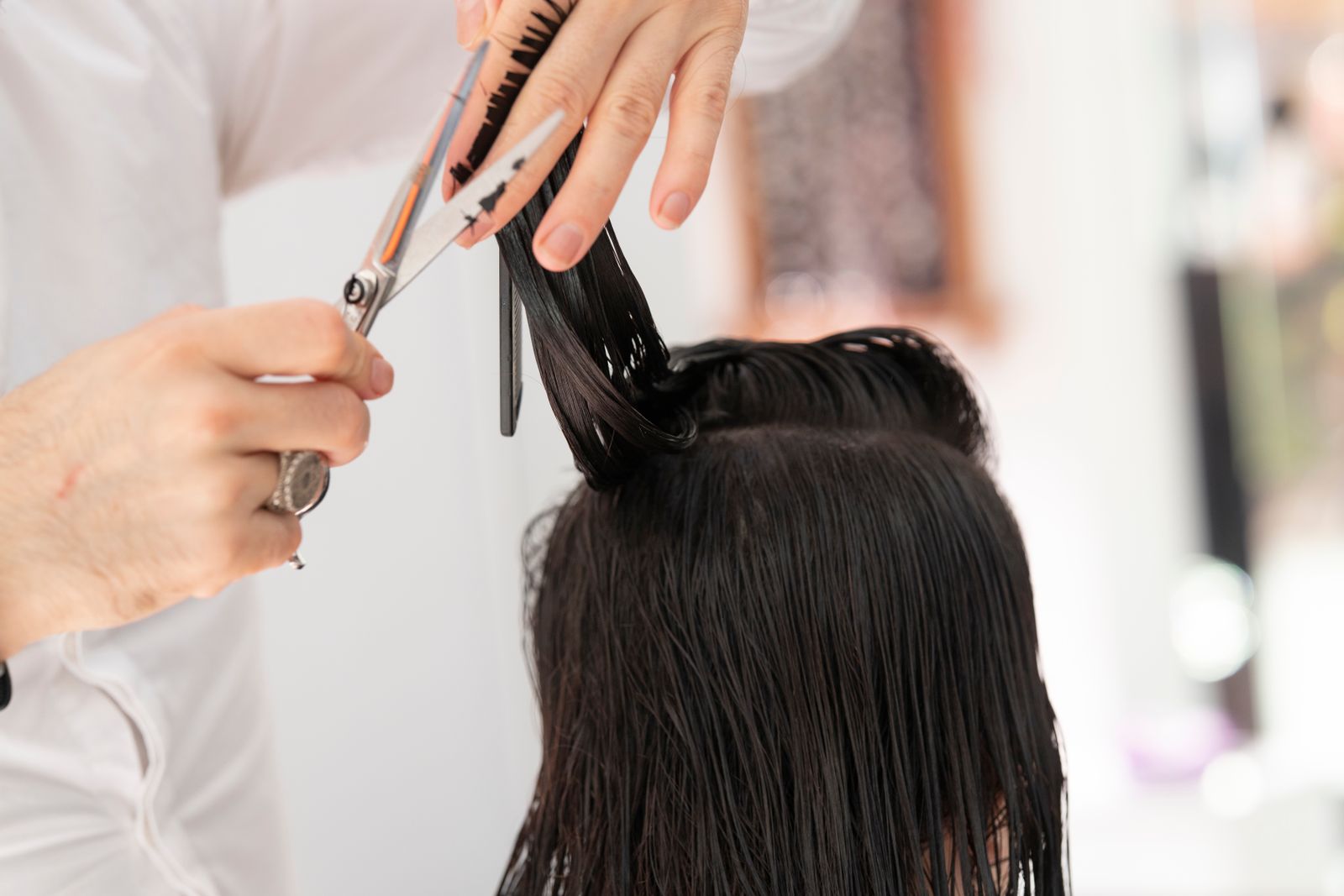
| A dusting trim | Removes an eighth to a quarter inch, clearing frayed tips before they climb | Restore length already lost to splits that were left alone for months | The only actual fix, and the cheapest one when done early |
| Ignoring them | Saves an appointment in the short term | Costs more length later, as splits travel upward and tangle neighboring strands into breakage | The most expensive option on the list, paid in inches |
How a split climbs, step by visible step
It starts as a tiny fork at the very tip, visible if you hold ends up to the light. Weeks later the fork has company: ends feel rough, catch on each other, and tangle within minutes of brushing. Further along, white dots appear along the strand, which are points where the hair is bent and about to break, and the last inch or two turns visibly thinner and lighter than the hair above it because so many strands have already snapped. At that stage the trim is no longer a dusting. The damage sets the length, and it always sets a longer one than the trim you were avoiding.
Prevention that actually prevents
Splits form where hair is oldest and most handled, so prevention is mostly friction management. Detangle from the ends upward instead of raking from the root. Ease off daily high heat, and use protection when you do style. Keep the ends conditioned and lightly oiled, since dry ends snag and fray faster. Hair that is lightened or permed splits sooner than virgin hair and earns a shorter trim interval. None of this is dramatic, which is the point: split ends are a slow problem with a boring solution, and boring wins.

The math nobody believes until they see it
Hair grows about half an inch a month. A dusting every ten to twelve weeks removes roughly an inch a year, leaving about five inches of net growth. Skipping a year of trims often ends in a corrective cut of two to three inches once the splits have climbed, plus the breakage already lost along the way. The clients at Southern Roots Salon who keep the longest hair are, without exception, the ones who trim it a little on a schedule.
Common questions
Can a split end heal if I condition it enough?
No. Conditioning improves how a split looks and feels and can slow it from worsening, but the strand is physically frayed and cannot rejoin. Only cutting above the split removes it.
How can I tell if I have split ends?
Hold a section of ends up against a dark or light background and look for tiny forks, white dots, and strands that taper to almost nothing. Ends that tangle constantly and feel rough are telling you the same thing.
Will trimming really not slow my growth?
Growth happens at the scalp and is unaffected by cuts. Regular small trims protect the length you grow from breaking off at the bottom, which is where most apparent growth problems live.
Photos in this guide are representative stock images.
← All guides from Southern Roots Salon← Back to Southern Roots Salon